
Key takeaways
⚖️ Dovetail is strong at qualitative synthesis, but many teams outgrow it due to pricing, rigidity, or AI limitations.
📚 The best Dovetail alternatives focus on structured research repositories, faster synthesis, and cross-team accessibility.
🔍 Not all alternatives are equal; some excel at insight synthesis, others at governance, scale, or AI-assisted analysis.
🔁 Choosing the right repository depends on your research maturity, collaboration needs, and how insights flow into product decisions.
🐝 UXtweak integrates with research repositories like Condens, helping teams connect raw user data with long-term insights.
Dovetail has become one of the most recognizable UX research repository tools, especially for qualitative analysis.
Still, many teams are actively looking for alternatives that better fit their workflows, budgets, or expectations around AI, collaboration, and scalability.
In this guide, we will break down what Dovetail does well, where it falls short, and the best Dovetail competitors in 2026 for centralized research insights.
What Dovetail does well
Dovetail is widely appreciated for making qualitative research more structured and accessible. It provides a clear framework for tagging, coding, and synthesizing interview data, usability sessions, and open-ended feedback.
Its interface is approachable for non-researchers, which helps bring stakeholders closer to user insights. Many teams also value its transcription features and its focus on qualitative rigor.
For small to mid-sized research teams running interview-heavy workflows, Dovetail can be a solid foundation for organizing qualitative data.

Where Dovetail falls short
Despite its strengths, Dovetail is not a perfect fit for every team. Common concerns come up repeatedly across G2, Capterra, and UX research communities.
⚠️ Steep learning curve for advanced features
Some of the more advanced capabilities take time to get comfortable with, particularly for teams new to dedicated research tools.
The learning curve for more advanced features can be a bit steep, especially for those unfamiliar with research platforms
⚠️ AI features feel shallow for advanced teams
While Dovetail offers AI-assisted tagging and summaries, many researchers report that these features lack transparency and depth. They often require heavy manual correction.
The learning curve for more advanced features can be a bit steep, especially for those unfamiliar with research platforms
⚠️ Navigation feels unintuitive
Some Dovetail workflows feel harder than necessary, with navigation and basic actions requiring more steps and explanation than expected.
Error messages are cryptic and unhelpful. Basic activities like cutting video highlights are at best unintuitive and utterly confounding at worst. I was given a *33-step* list of instructions to make a highlight. Also, UX is far too complicated and involves far too many concepts to learn. Even basic UX elements like a window close button are inefficient and don’t work as expected.
Best Dovetail alternatives and competitors in 2026
We have researched and created a clean list of the top Dovetail alternatives, ordered by relevance and credibility in the UX research space.
1. Condens
Best for: Structured qualitative synthesis and research repositories built for research teams
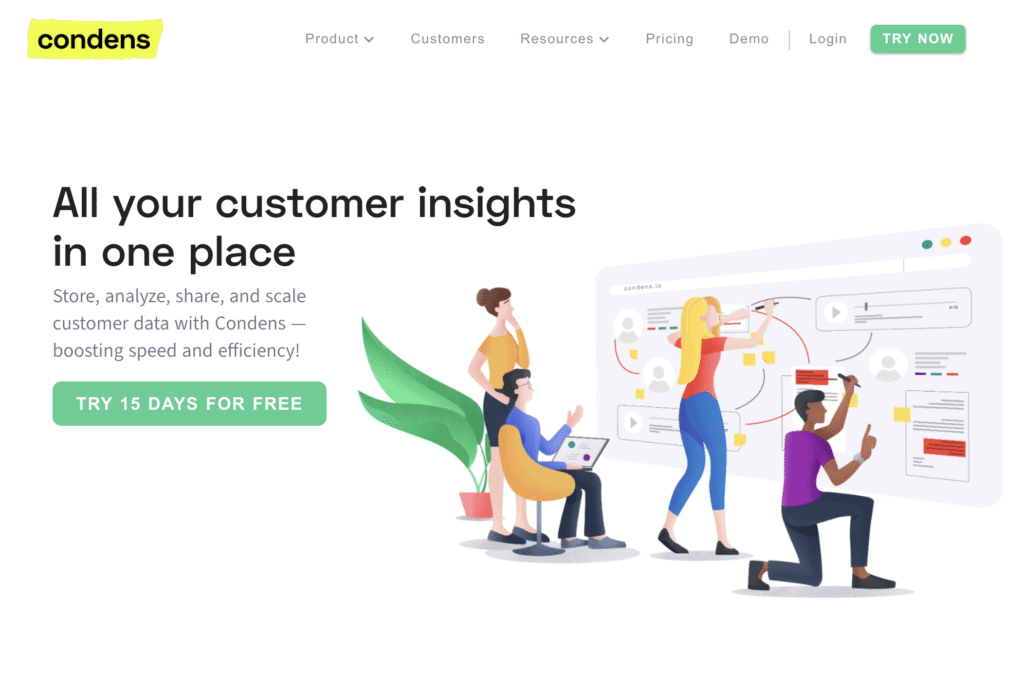
Condens is one of the most frequently mentioned Dovetail competitors among experienced UX researchers. It focuses heavily on turning raw research into reusable insights through structured coding, synthesis boards, and evidence-backed findings.
Teams appreciate Condens for its clarity, transparency, and flexibility across different research methods. It is especially strong for organizations running continuous research programs.
Main features
- Qualitative coding and synthesis
- Insight libraries with evidence linking
- Collaboration and stakeholder sharing
- Strong ResearchOps support
Pricing
Condens offers a Lite Plan for €15 per month, a Business Plan starting at €500 per month, and a custom Enterprise Plan.
💡 Pro Tip
UXtweak integrates with research repositories like Condens, allowing you to connect usability tests, surveys, and user interviews directly to long-term insights instead of letting raw data live in silos. 🍯
2. EnjoyHQ
Best for: Enterprise-level insight management and stakeholder alignment
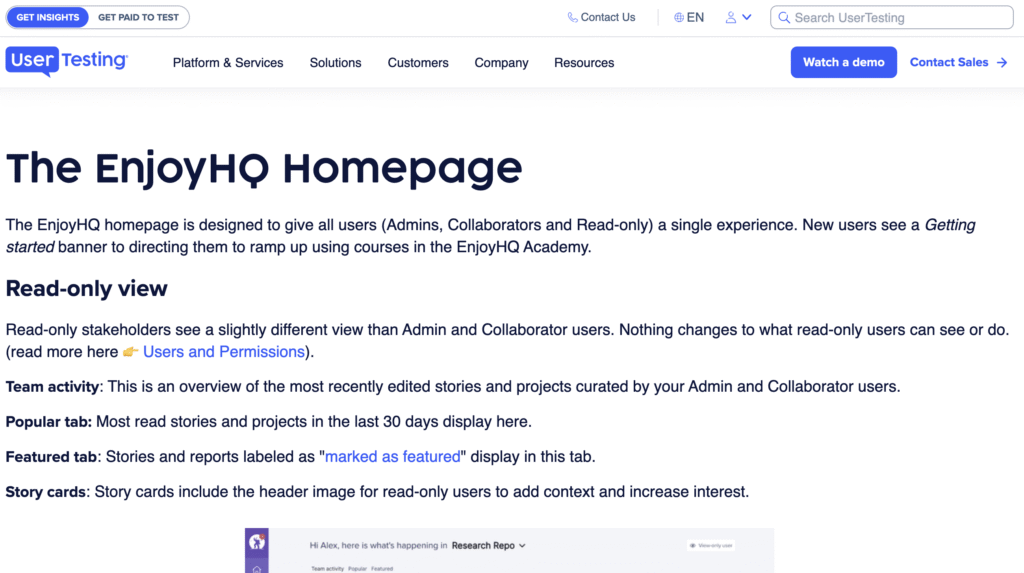
EnjoyHQ is designed for large organizations that need governance, permissions, and structured insight sharing across departments. It supports qualitative and quantitative inputs and emphasizes traceability from data to decisions.
It works well for teams managing research at scale and collaborating across product, design, and leadership.
Main features
- Centralized research repository
- Insight tagging and governance
- Stakeholder dashboards
- Enterprise-grade permissions
Pricing
EnjoyHQ follows enterprise-focused pricing with custom plans based on organization needs.
3. Aurelius
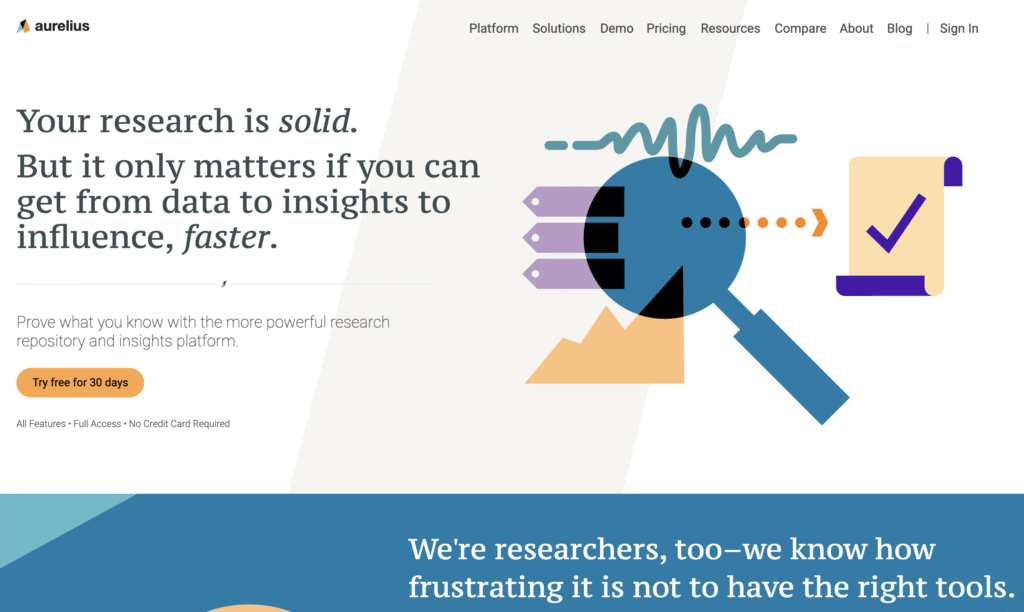
Best for: Deep qualitative analysis and thematic synthesis
Aurelius is popular among researchers who want powerful synthesis without heavy process overhead. It supports coding, affinity mapping, and insight generation with a strong focus on qualitative depth.
It is often chosen by teams that prioritize synthesis quality over broad stakeholder access.
Main features
- Advanced coding and tagging
- Thematic analysis tools
- Insight linking
- Research project organization
Pricing
Aurelius offers a Professional Plan for $79 per month, a Premium Plan starting at $259 per month and a custom Enterprise Plan.
4. Marvin
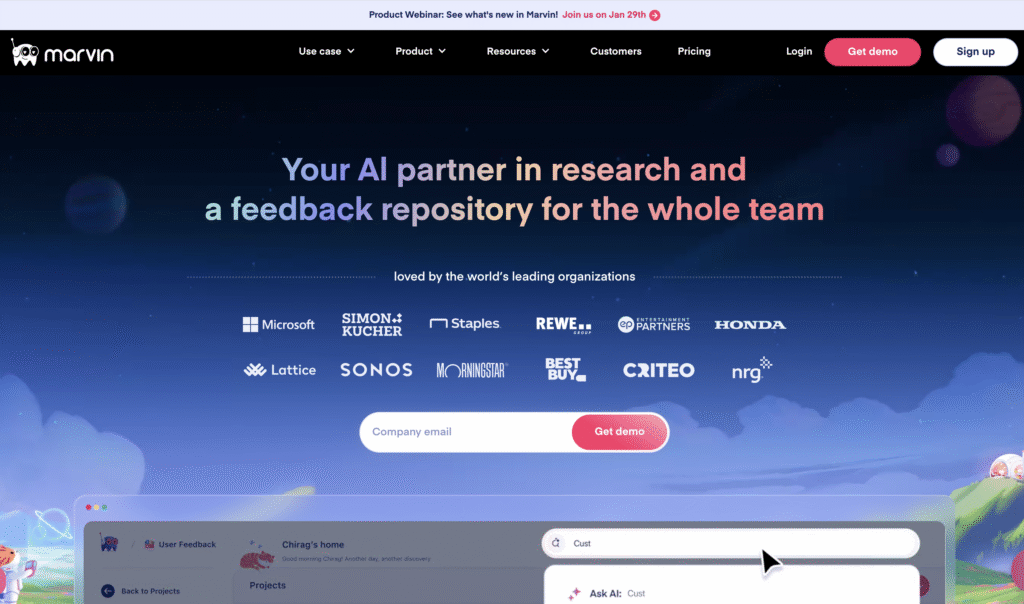
Best for: AI-assisted qualitative analysis
Marvin positions itself as an AI-powered alternative to Dovetail, focusing on automating parts of synthesis and pattern detection. It appeals to teams experimenting with faster analysis workflows.
While AI outputs still require validation, Marvin is often cited as a forward-looking option.
Main features
- AI-assisted tagging and summaries
- Interview and feedback analysis
- Insight clustering
- Collaboration tools
Pricing
Marvin has a free tier available, along with an Essentials Plan starting at $50 per user per month, a Standard Plan for $100 per user per month, and a custom Enterprise Plan.
5. Userbit
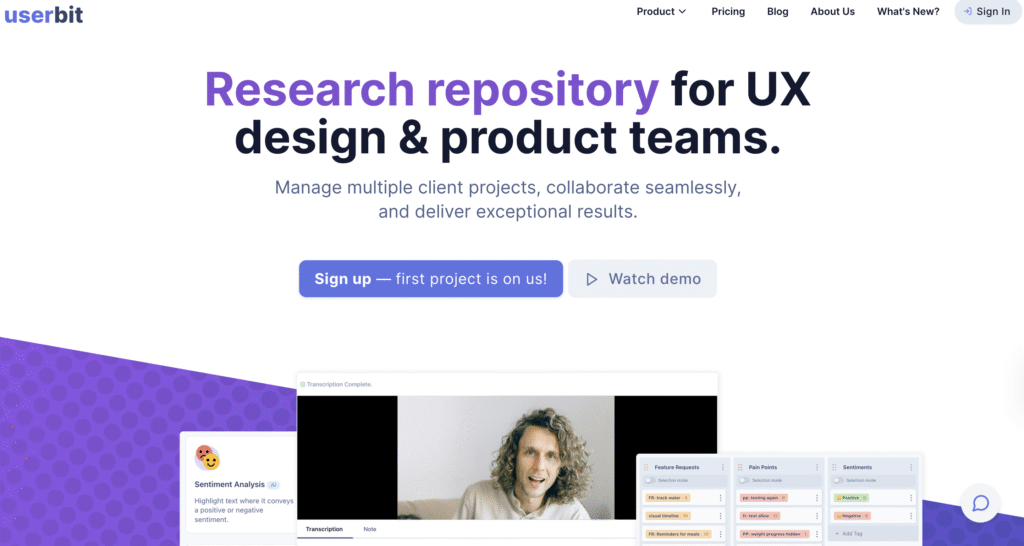
Best for: Insight synthesis with strong structure and traceability
Userbit is a well-known Dovetail alternative that emphasizes linking insights directly to research evidence. It supports interviews, notes, and observations while keeping findings structured and defensible.
Researchers often highlight its balance between flexibility and rigor.
Main features
- Evidence-based insights
- Research synthesis boards
- Team collaboration
- Interview and note management
Pricing
Userbit offers a free tier, a usage-based ($20) version, and an unlimited version for $199 per month.
6. Notion
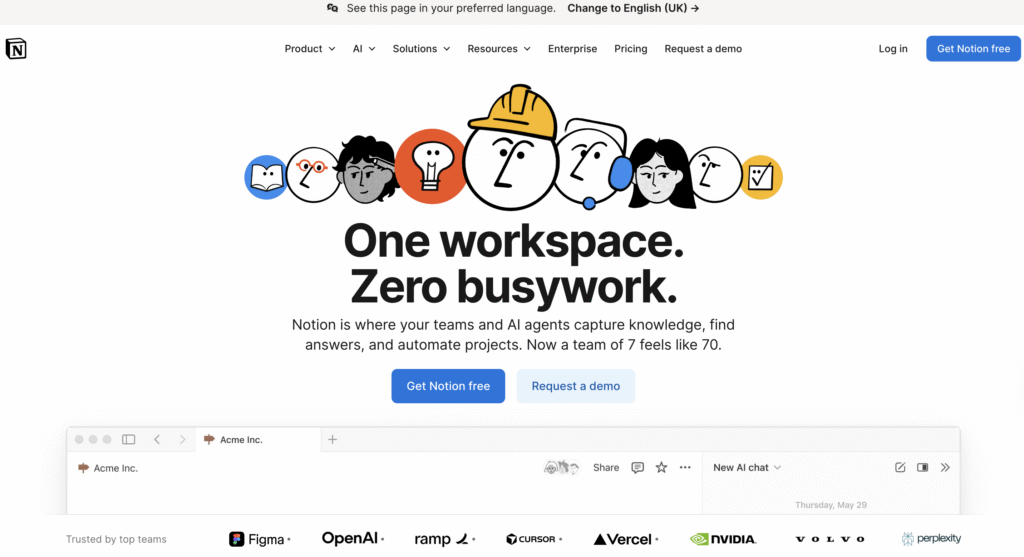
Best for: Lightweight, flexible research documentation
Notion is not a dedicated UX research repository, but many teams use it as a Dovetail alternative due to its flexibility. With discipline and templates, it can support insight tracking and documentation.
However, synthesis quality depends heavily on process maturity.
Main features
- Custom databases
- Documentation and notes
- Collaboration across teams
- Template-based workflows
Pricing
Notion offers a free plan, with the paid Plus plan starting at €9.50 per month, a Business Plan for €19.50 per month, and an Enterprise Plan.
7. Miro
Best for: Visual synthesis and collaborative workshops
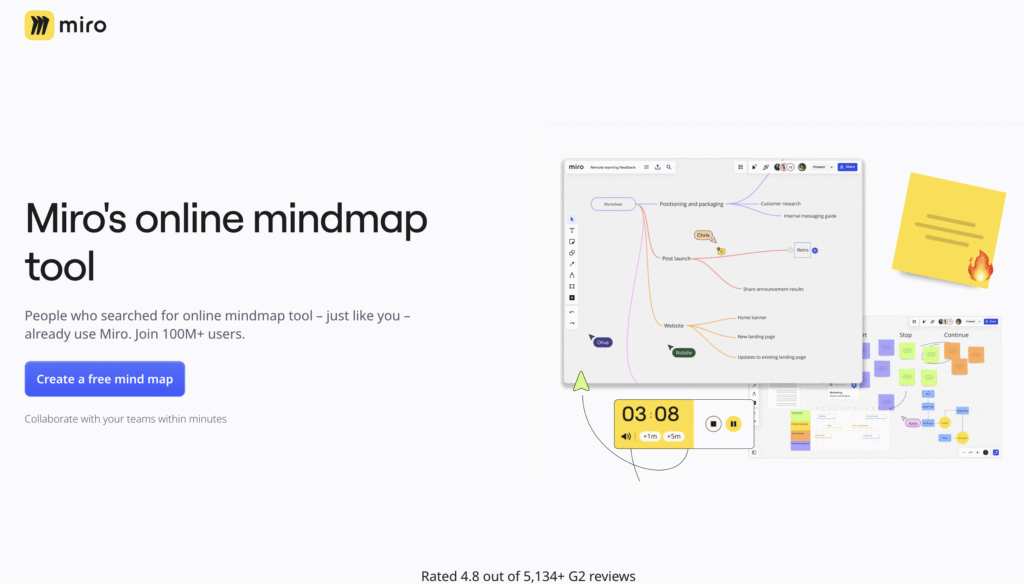
Miro is often used alongside or instead of repositories for synthesis, especially during workshops. While not a long-term research memory, it excels at sense-making and alignment.
It works best as a complementary tool rather than a full Dovetail replacement.
Main features
- Affinity mapping
- Workshop facilitation
- Visual collaboration
- Templates for synthesis
Pricing
Miro has a free plan, with paid Starter Plan starting at €8 per member per month, a Business Plan at €16 per member per month, and a custom Enterprise Plan.
8. Airtable
Best for: Structured research tracking with customization
Airtable allows teams to build custom research databases combining qualitative and quantitative inputs. It is flexible and powerful, but requires setup and governance.
Teams with strong ResearchOps practices often use it successfully.
Main features
- Custom research databases
- Views and filters
- Integrations with other tools
- Collaboration features
Pricing
Airtable offers a free plan, with a paid Team Plan starting at $24 per month, a Business Plan at $54 per month and a custom Enterprise Plan.
9. Confluence
Best for: Enterprise documentation and knowledge sharing
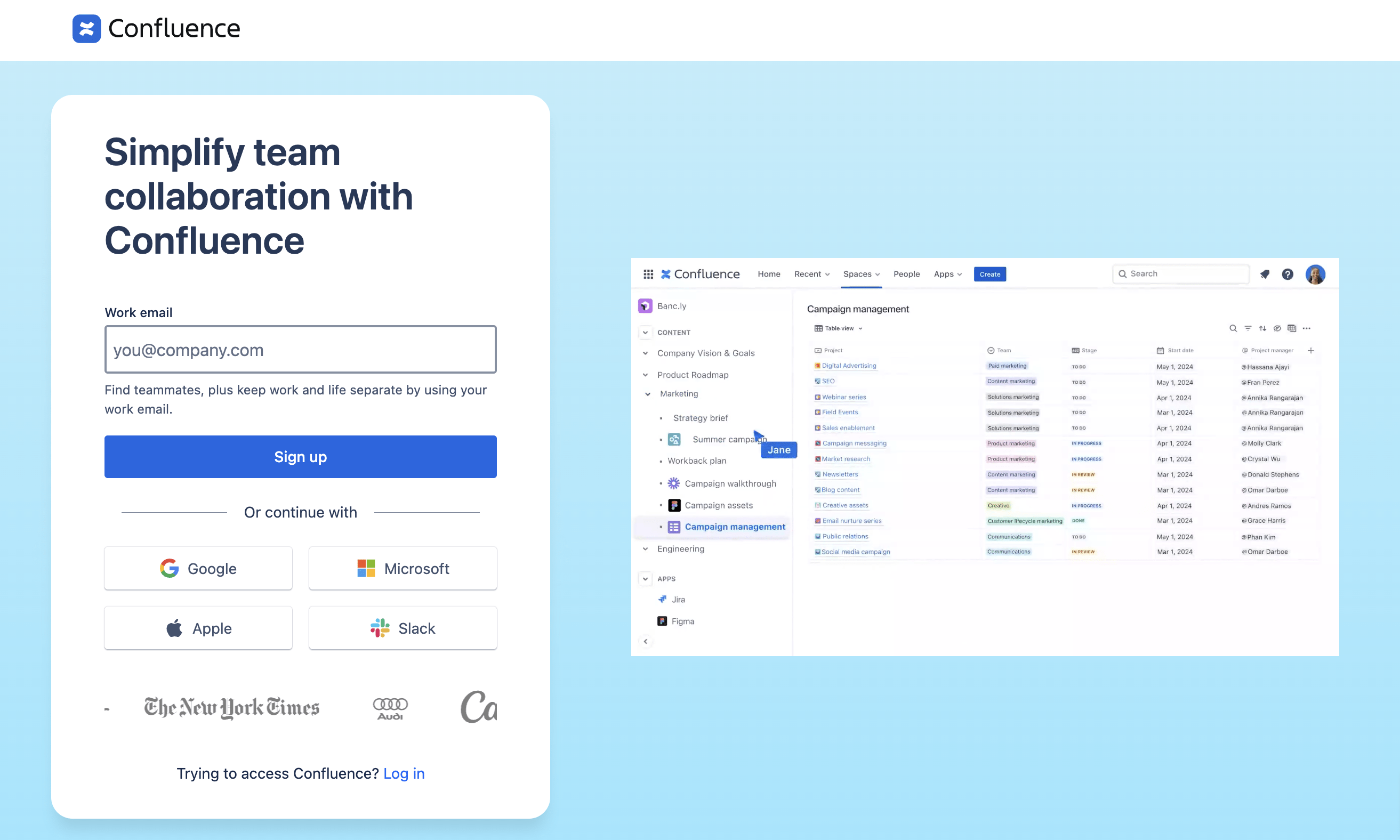
Confluence is commonly used to store research outputs and insights in organizations already using Atlassian tools. While not built for synthesis, it supports long-term documentation and discoverability.
It works best when paired with dedicated research tools.
Main features
- Structured documentation
- Permissions and governance
- Team collaboration
- Integration with Jira
Pricing
Confluence offers a free tier, with paid Standard Plan starting at $5.42 per user per month, a Premium Plan starting at $10.44 per user per month, and a custom Enterprise Plan.
10. ResearchOps Hub
Best for: Research governance and operational maturity
ResearchOps-focused platforms support repositories, workflows, and governance across large research organizations. These tools prioritize consistency, access control, and long-term insight reuse.
They are ideal for mature teams scaling research operations.
Main features
- Research workflows
- Repository governance
- Insight sharing
- Operational analytics
Pricing
ResearchOps Hub offers custom, enterprise-level plans based on team size, data volume, and organizational needs.
How to choose the best UX research repository tool
Not all Dovetail alternatives solve the same problems, so choosing the right UX research repository depends on how your team collects, synthesizes, and shares insights, not just on replacing Dovetail feature by feature.
🧪 Full research cycle support
A strong repository should support the entire research lifecycle, from collecting raw data to synthesizing insights and reusing them later.
Tools that only store notes or transcripts often create silos, while platforms that connect discovery, analysis, and insight sharing help teams build cumulative knowledge instead of starting from scratch each time.
📁 Accessibility across the organization
Research insights lose value if only researchers can find or understand them. Look for tools that make insights easy to browse, search, and consume for product managers, designers, and stakeholders.
Clear structures, tagging, and readable summaries matter more here than advanced analysis features.
🛡️ Data storage, security, and compliance
UX research often includes sensitive user data, so security is not optional.
Make sure the tool supports role-based access, data permissions, and compliance standards relevant to your organization, especially if you work in regulated industries or across regions.
A good repository should scale safely as your research volume grows.
Wrapping up
Dovetail remains a strong qualitative research tool, but it is no longer the default choice for every team. Modern UX organizations need repositories that scale, integrate with continuous research, and support faster insight sharing.
The best research repositories reflect this shift, offering more flexibility, better synthesis, or stronger operational support.
A strong repository works best when paired with continuous research. With UXtweak, you can gather user insights through usability testing and surveys and then organize them in the repository your team already uses. 🐝